
Digiway — Building a Scalable Payment Infrastructure Platform
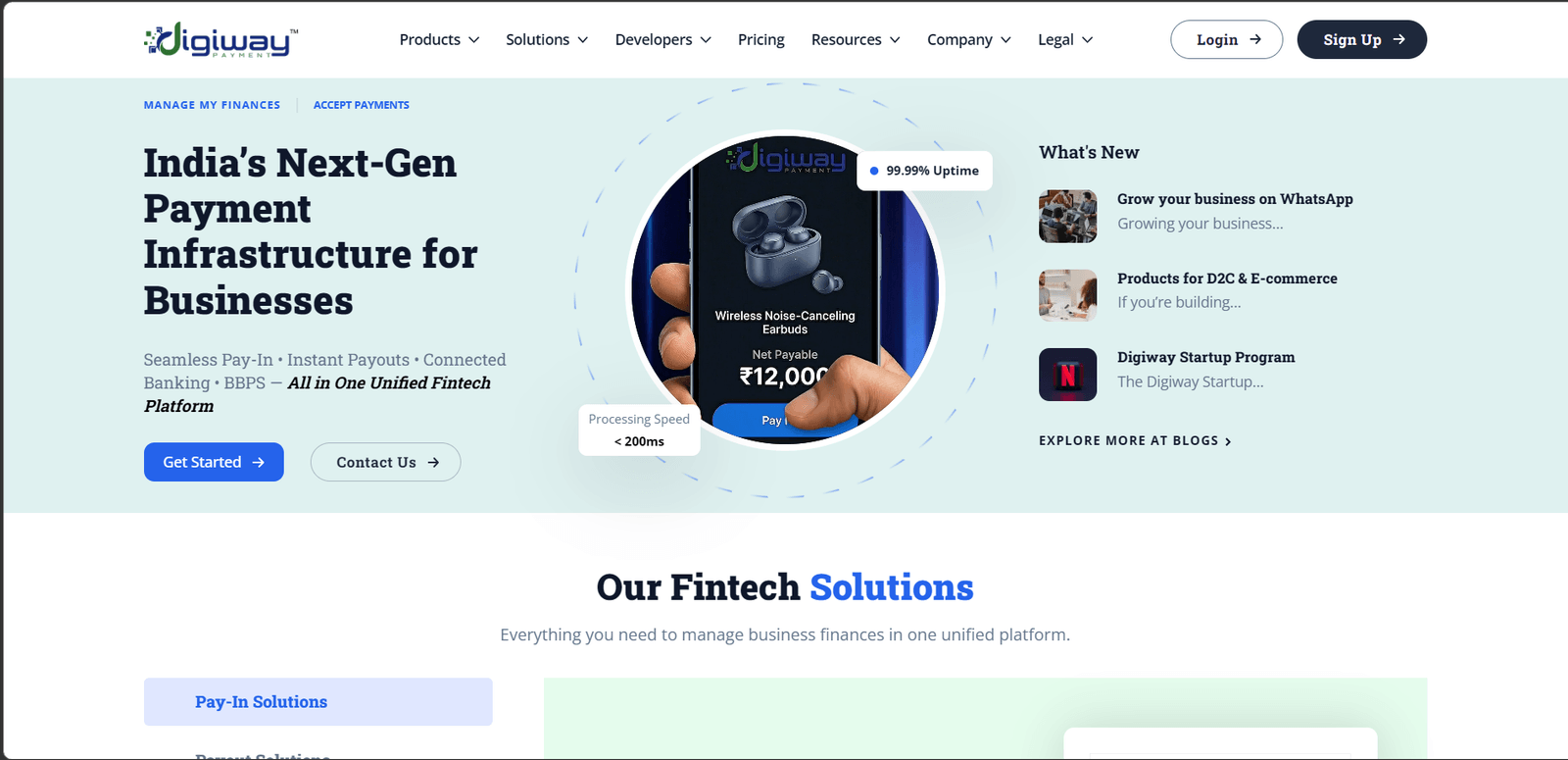
A modern fintech ecosystem engineered to simplify merchant operations, payouts, transaction monitoring, and scalable payment workflows through a unified dashboard.
Visit live project- Client
- Digiway
- Industry
- FinTech / Payment Infrastructure
- Published
- May 2026
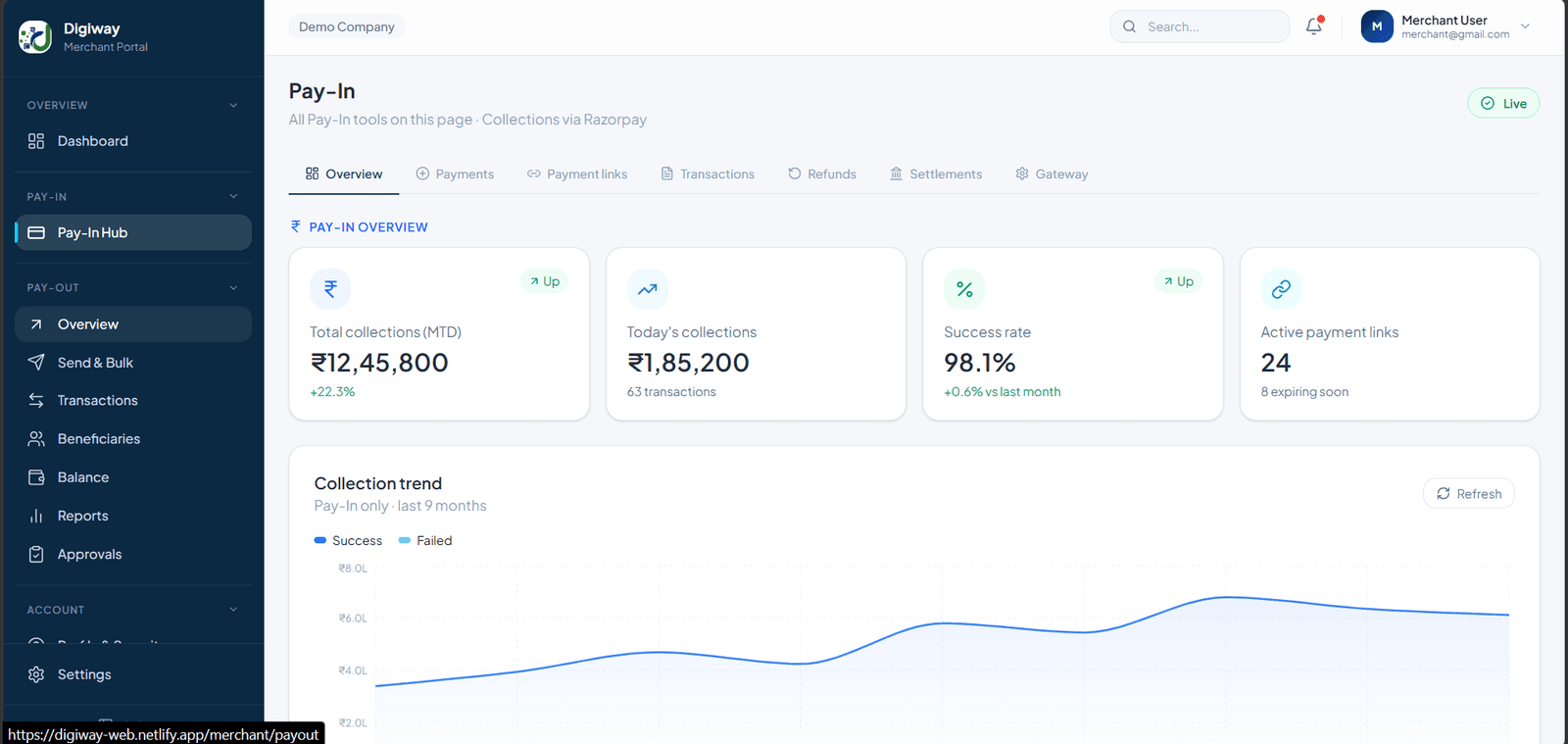
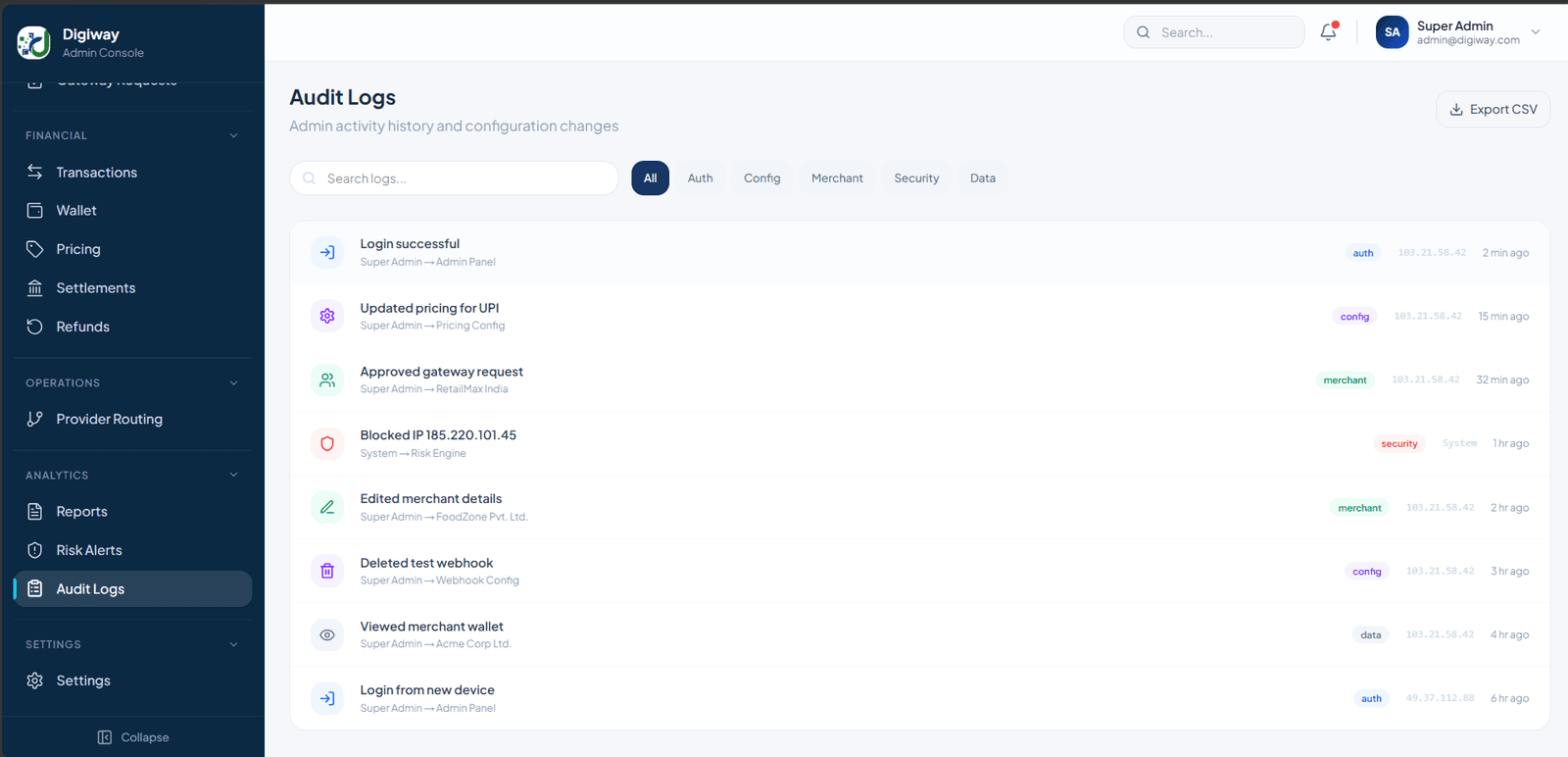
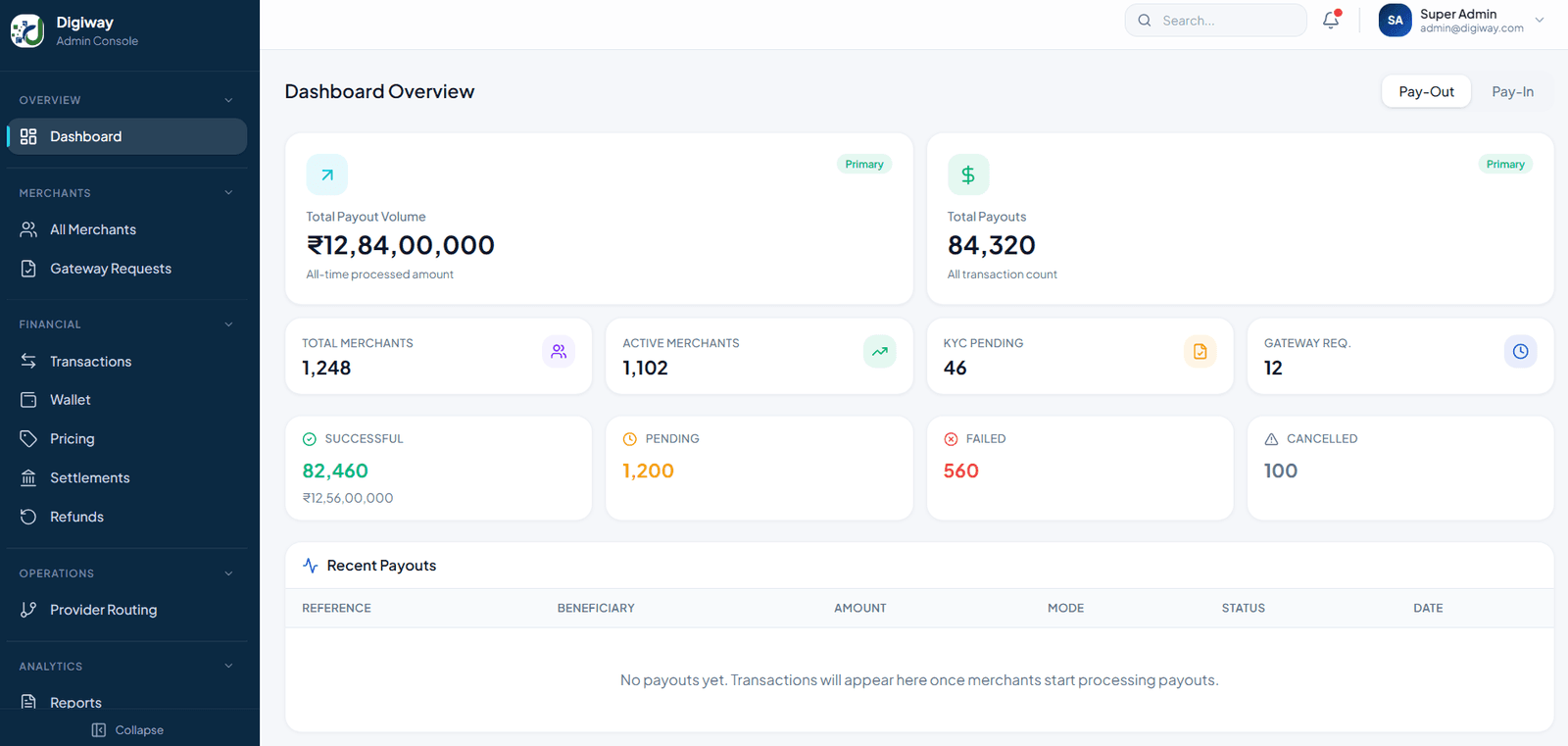
Slide 1 of 7
Why this engagement existed
Digiway required a centralized platform capable of handling merchant management, payout operations, transaction monitoring, and operational analytics in a single ecosystem. Traditional workflows relied on multiple disconnected systems and manual processes, creating inefficiencies in transaction visibility, merchant handling, and reporting. As the platform vision expanded, scalability and performance became major concerns. The challenge was to build a fintech-grade infrastructure that could remain fast, secure, and operationally clear while supporting future growth and high-volume transaction workflows.
What we shipped
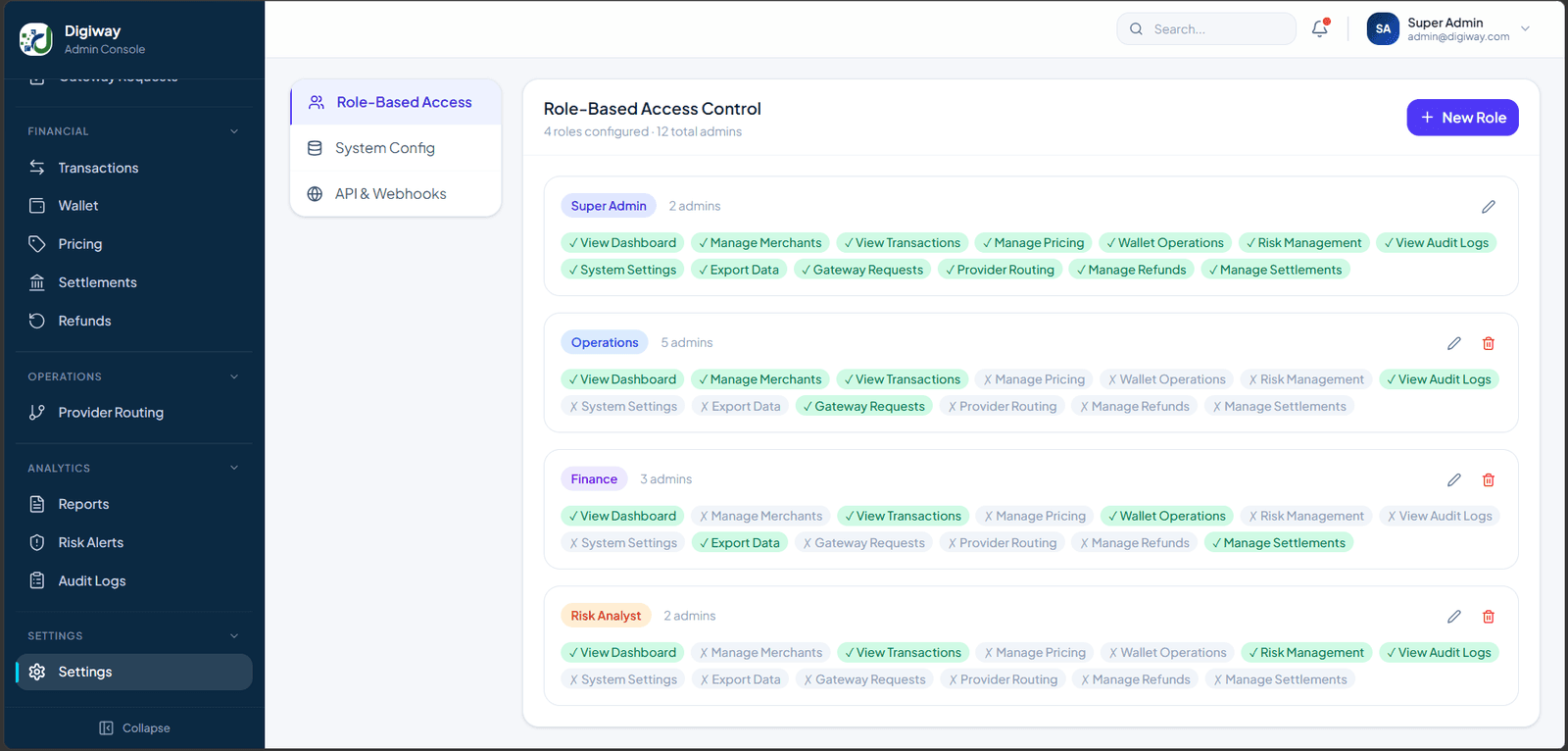
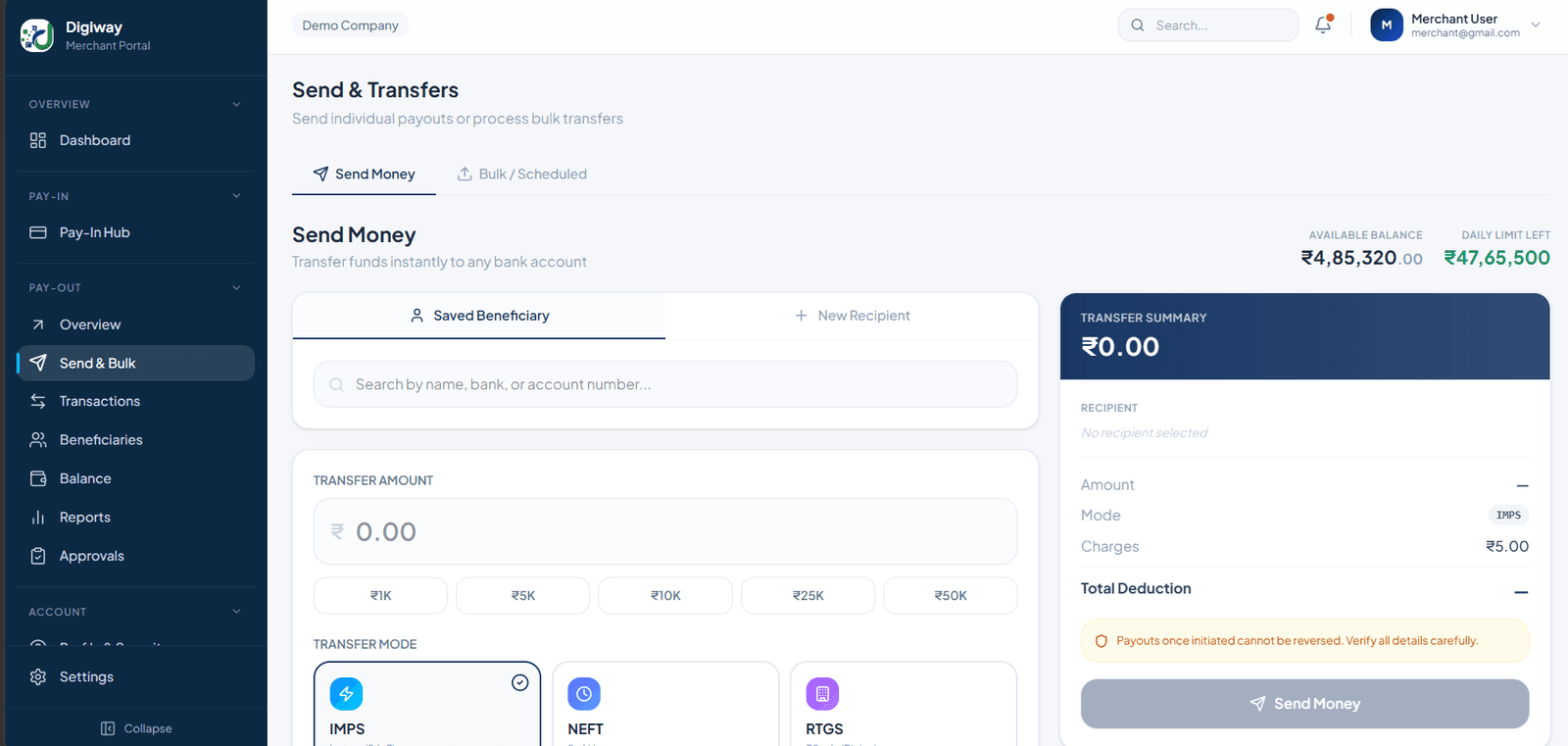
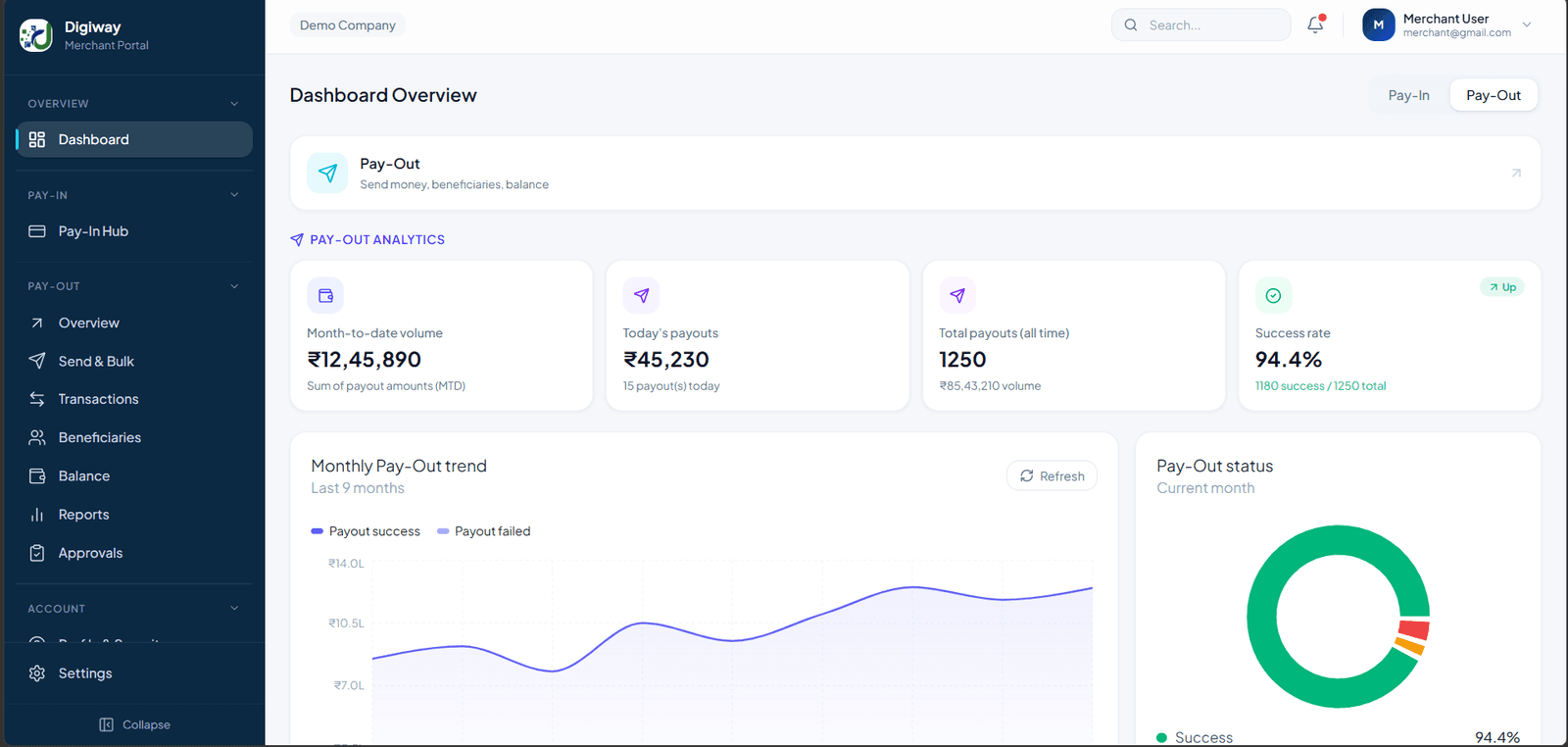
We designed and developed a modular payment operations ecosystem focused on scalability, operational visibility, and performance. The platform combines merchant management, transaction analytics, payout workflows, and centralized operational controls into a streamlined dashboard experience. A scalable backend architecture was implemented to support future fintech integrations, large transaction volumes, and high-performance data processing. The dashboard system was redesigned with a focus on usability, allowing operators and merchants to navigate complex financial workflows efficiently through structured interfaces and real-time analytics.
The technology behind it
- React
- TypeScript
- Tailwind CSS
- Go
- PostgreSQL
- Redis
- AWS
- Docker
- Cloudflare
- WordPress
What changed in production
Outcomes measured on production traffic in the first six months after launch.
Operational efficiency
improvement in merchant onboarding, payout, and transaction monitoring throughput compared to the prior fragmented workflow
Dashboard response
average response time across centralized administration and merchant operator dashboards
Region coverage
launched across India with a payment infrastructure architected for additional region rollouts without re-platforming
Backend services
scalable service boundaries ready for additional financial services, API integrations, and automation without major redesign
How we got there
Background
Digiway was envisioned as a modern payment infrastructure platform capable of supporting merchant onboarding, payout workflows, transaction monitoring, and centralized financial operations.
The primary objective was not just to ship a dashboard interface, but to engineer a scalable fintech ecosystem that could support operational growth, future integrations, and high-performance transaction management. As payment operations become increasingly data-intensive, the platform required a strong architectural foundation capable of balancing usability, speed, and scalability simultaneously.
What we did
We approached the project with a fintech-first engineering strategy focused on modularity, scalability, and operational clarity.
The system architecture was designed to support both merchant and admin operations through separate yet interconnected dashboard environments. We built transaction monitoring systems, payout management workflows, an analytics layer, and centralized operational controls to streamline platform management.
Surface-side, the dashboard was optimized to simplify complex financial workflows while keeping navigation fast and data visibility uncluttered. On the backend, services were structured around scalable patterns — domain-aligned boundaries, typed contracts, and infrastructure-as-code — so future expansion lands as additive work rather than a rewrite. Performance optimization, dashboard responsiveness, and operational accessibility remained core priorities throughout the build.
Outcomes
The final platform delivered a significantly more streamlined operational experience for managing payment workflows and merchant activities.
Digiway achieved improved transaction visibility, centralized operational control, faster dashboard performance, and a scalable backend structure prepared for future fintech expansion. Operational efficiency rose 68% against the prior fragmented workflow, and average dashboard response landed under 120 ms across the operator and merchant surfaces.
The modular architecture now provides a strong foundation for introducing additional financial services, API integrations, and advanced automation capabilities as the platform grows.
Common questions about the Digiway engagement
What did Dashhold build for Digiway?
What stack runs the Digiway platform?
What measurable outcomes did the Digiway build deliver?
How is the Digiway platform architected for future growth?
Other engagements you might want to read
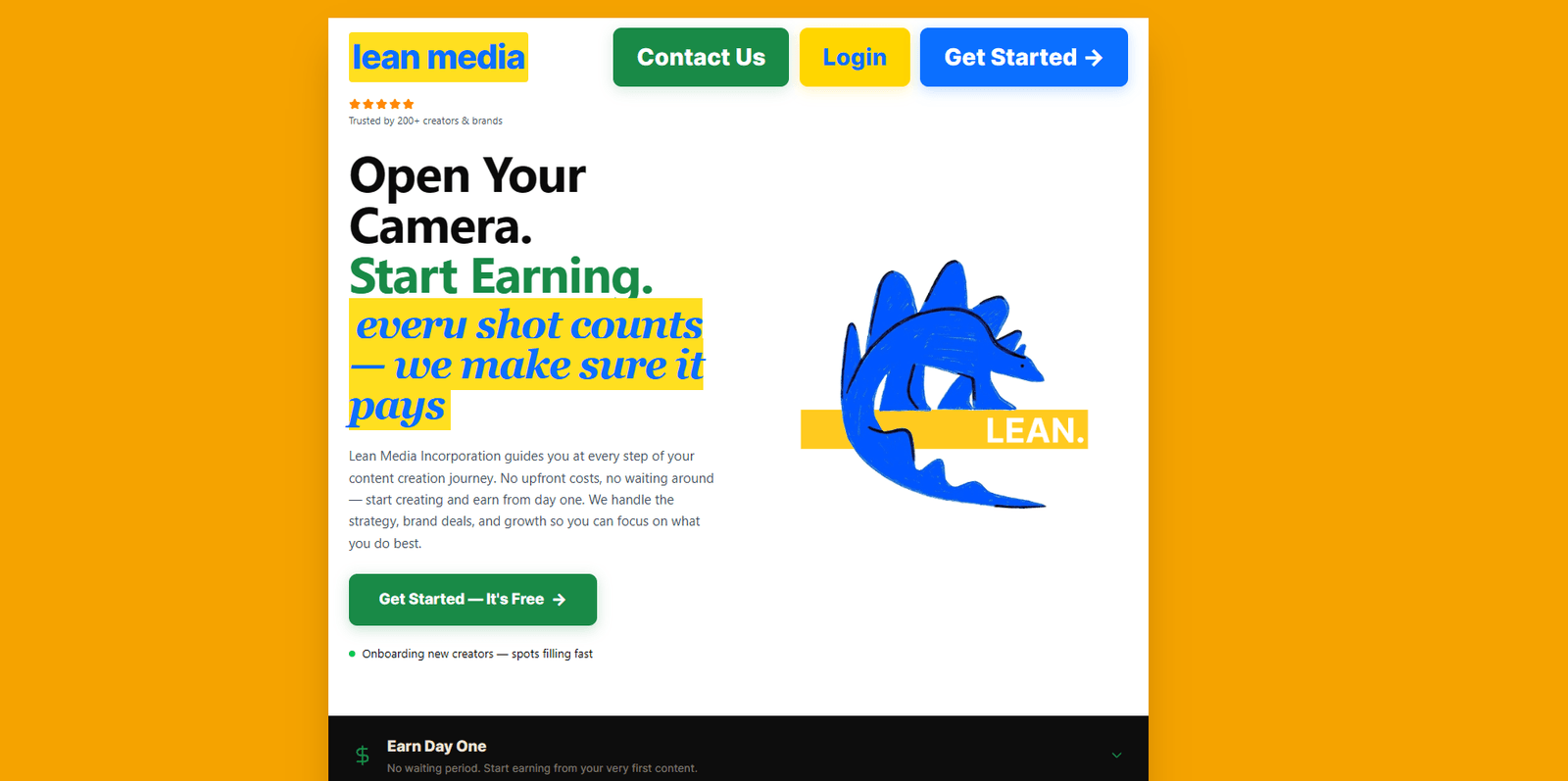
LeanMedia — Creator-First Influencer Marketing Platform
A unified platform for an influencer marketing agency that pairs in-house production and account management with a creator workspace and campaign command centre.
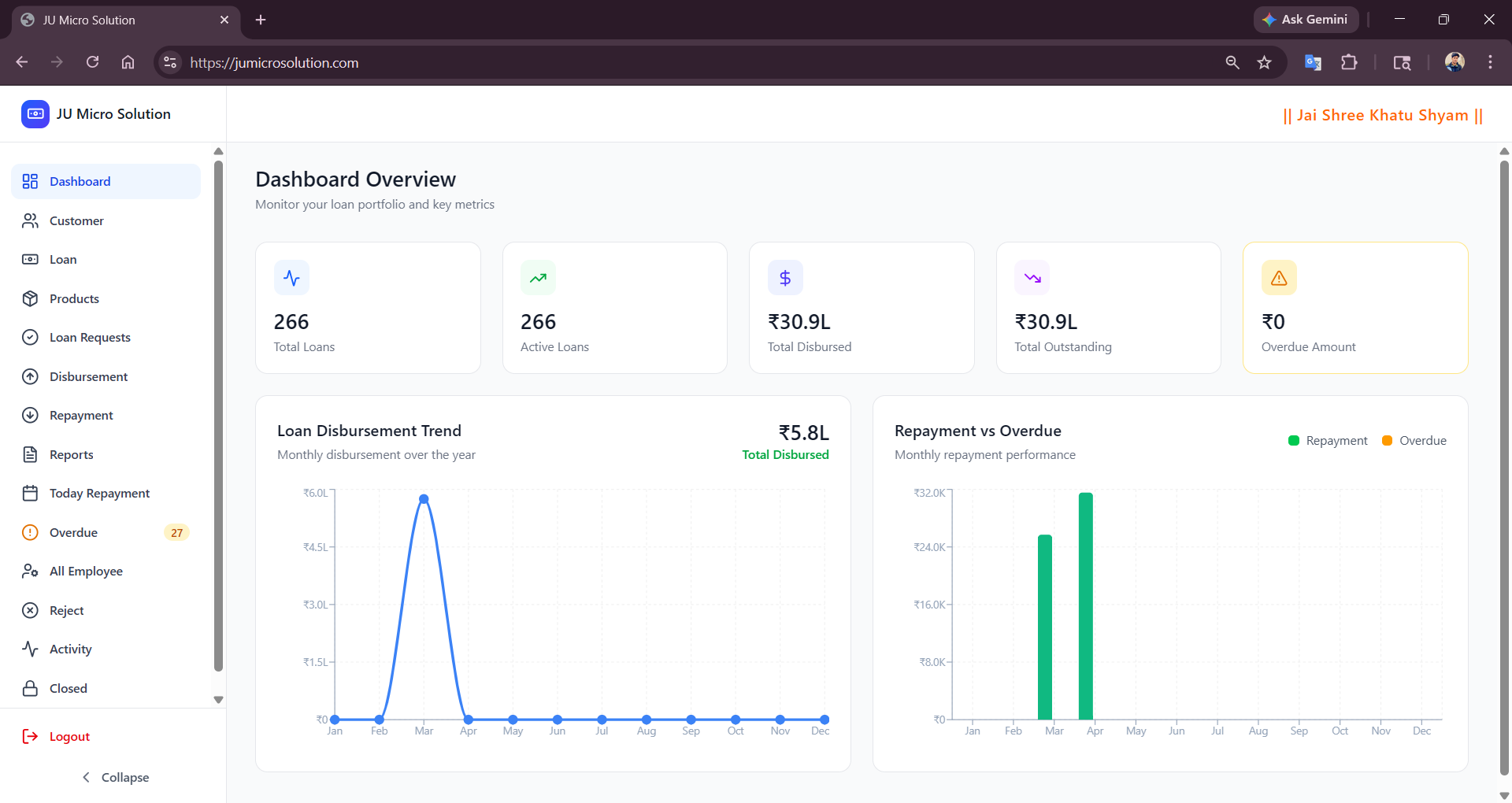
JU Micro Solution Foundation — Smart Loan Management Ecosystem
A multi-role loan management ecosystem with three field apps and a centralized web platform that lifted operational throughput 61% and brought dashboard responses under 140ms.